
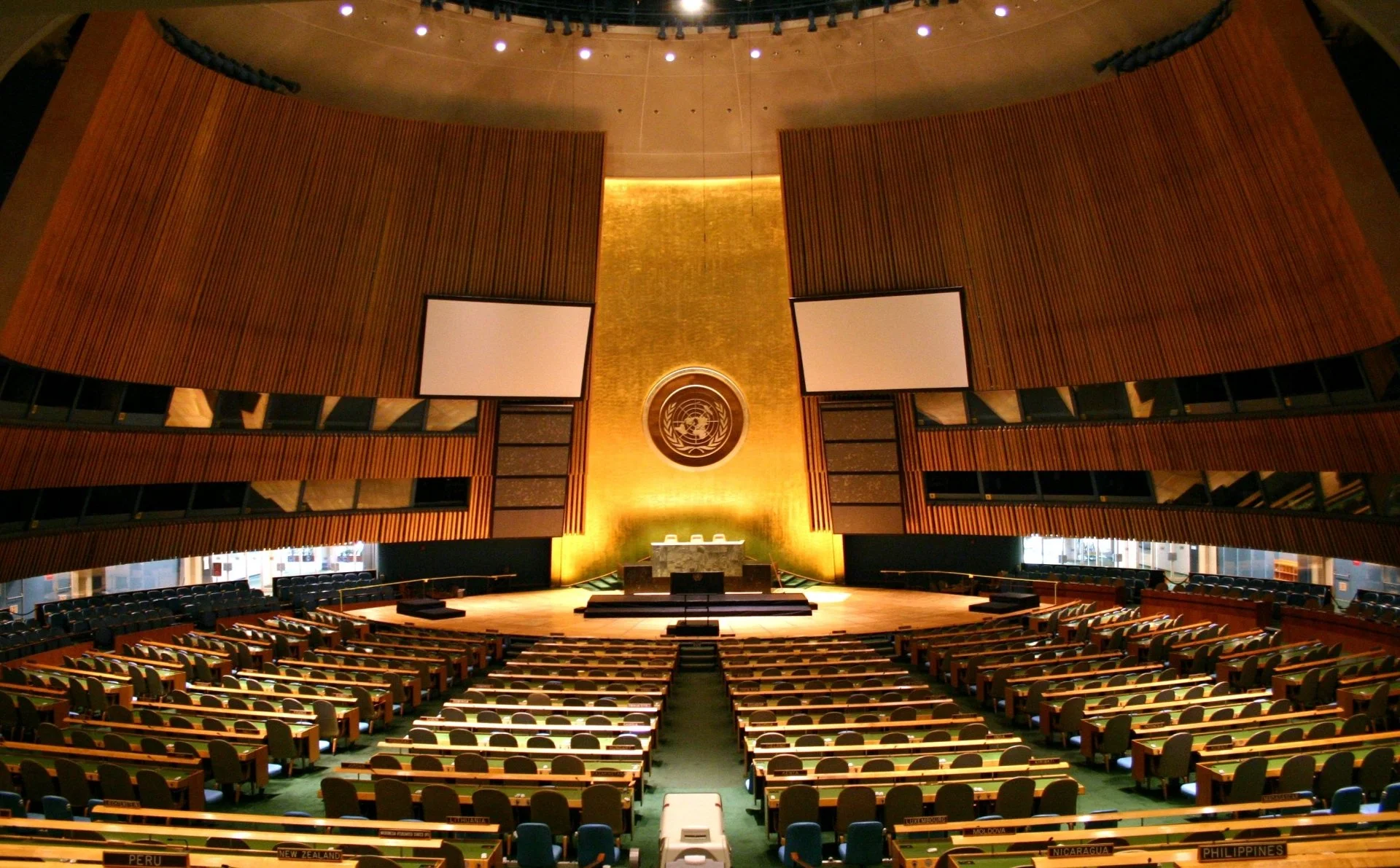
DISEC
Disarmament and International Security Committee
Director: Natasha Prelevic — Committee Type: Double Delegation
In this session, DISEC confronts some of the most pressing challenges to global peace and security in the modern era. Delegates will navigate a world on the brink of strategic upheaval, tackling issues that could redefine the world’s balance of power: modern nuclear politics, the rise of private armies operating beyond borders, and the escalating militarization of critical trade corridors like the Red Sea. Through debate, negotiation, and collaboration, delegates will confront the consequences of these global tensions and create innovative and practical solutions to prevent conflict, protect civilians, and uphold international stability.
-
For nearly 50 years, the Treaty on the Non-Proliferation of Nuclear Weapons (NPT) has been the cornerstone of international efforts to prevent nuclear catastrophe. But today, its foundations are being tested: nuclear powers modernize their arsenals, rogue states push the limits of their programs, and challenges with compliance threaten global security. Delegates will consider the future of NPT, weighing its successes and failures, debating how to enforce accountability, and designing strategies to ensure that the growing nuclear threat does not spiral out of control.Topic summaries coming soon.
-
Private military companies (PMCs) are no longer a footnote within international warfare, but are becoming a rising force on the battlefield. Operating beyond traditional chains of accountability, PMCs raise urgent questions about legality, ethics, and human rights in modern war. Delegates will explore how these private armies reshape modern conflicts, influence national security, and impact the civilians caught in the crossfire. Through crafting necessary regulations, ensuring transparency, and balancing the demands of security and ethics, delegates will need to confront the rise of a new dimension of warfare.
-
The Red Sea is a lifeline for global trade and a centre of regional power; however, recently it has increasingly become a powder keg. As nations and non-state actors deploy forces to secure strategic dominance, the risk of conflict, disruption, and economic fallout grows. Delegates will examine the escalating militarization of this vital corridor, weighing threats to shipping, regional stability, and international commerce. Solutions will require diplomacy, creative security frameworks, and attention to the careful balancing act of national and global interests to keep this crucial waterway open and safe to all.
-
Arab Republic of Egypt
Argentine Republic
Canada
Central African Republic
Commonwealth of Australia
Democratic People's Republic of Korea
Federal Democratic Republic of Ethiopia
Federal Republic of Germany
Federal Republic of Nigeria
Federal Republic of Somalia
French Republic
Hellenic Republic (Greece)
Islamic Republic of Iran
Islamic Republic of Pakistan
Italian Republic
Japan
Kingdom of Denmark
Kingdom of Norway
Kingdom of Saudi Arabia
Kingdom of Spain
Kingdom of Sweden
Kingdom of Thailand
Kingdom of the Netherlands
Malaysia
New Zealand
People's Republic of China
Republic of Armenia
Republic of Belarus
Republic of Chile
Republic of Cuba
Republic of Cyprus
Republic of Djibouti
Republic of Ghana
Republic of India
Republic of Indonesia
Republic of Iraq
Republic of Kazakhstan
Republic of Kenya
Republic of Korea
Republic of Mali
Republic of Poland
Republic of Singapore
Republic of South Africa
Republic of the Philippines
Republic of the Sudan
Republic of Turkey
Republic of Yemen
Russian Federation
Socialist Republic of Vietnam
State of Eritrea
State of Israel
State of Libya
State of Qatar
Sultanate of Oman
Ukraine
United Arab Emirates
United Kingdom of Great Britain and Northern Ireland
United Mexican States
United States of America