
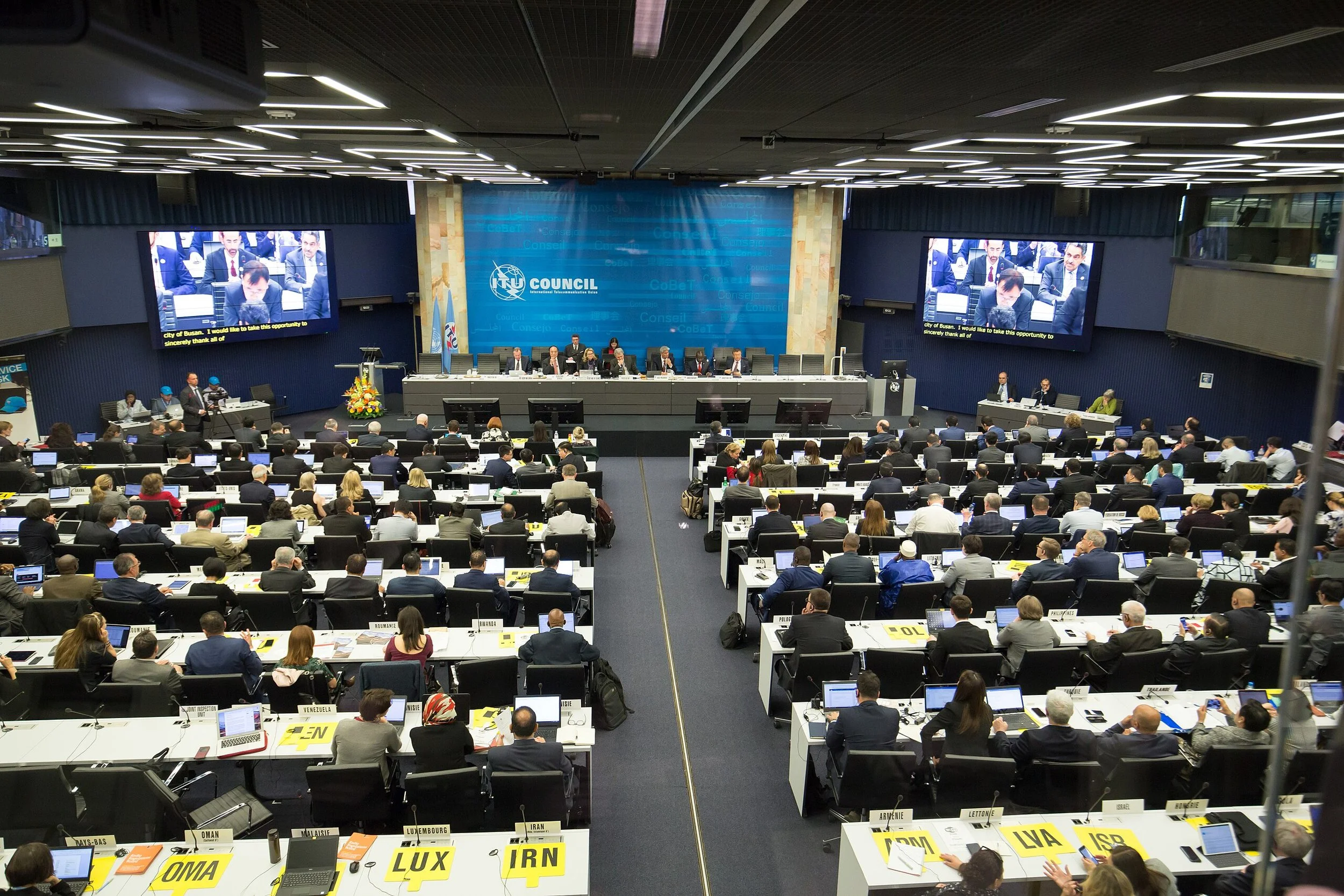
ITU
International Telecommunication Union
Director: Shannon Gao — Committee Type: General Assembly
This committee examines how artificial intelligence is reshaping both cultural preservation and modern warfare. Around the world, endangered languages, traditions, and historical artifacts face extinction—but AI now enables digital restoration, reconstruction, and archiving on an unprecedented scale. These benefits come with major concerns, including cultural bias, loss of authenticity, data ownership, digital privacy, and widening global inequality.
At the same time, nations are developing Lethal Autonomous Weapons Systems (LAWS)—AI-driven weapons capable of selecting and engaging targets without human control. While they promise efficiency, they also raise grave issues: accountability gaps, ethical violations, escalation risks, and the lowering of barriers to warfare.
Delegates will debate how the international community should regulate AI to protect cultural heritage while preventing dangerous militarization and ensuring AI is used responsibly and equitably worldwide.
-
Across the globe, many languages, traditions, and historical records are at risk of fading away due to globalization, conflict, or the passage of time. AI offers new solutions to this challenge. For example, AI-driven restoration has helped recover lost pieces of art and rebuild historical architecture digitally, giving people access to this heritage. Meanwhile, there are critical issues, like biases, loss of authenticity, digital privacy, who owns the data, and how to reduce the inequality are also critical questions to ask.
-
As nations develop more new and advanced AI algorithms, there has been a trend of using AI in the military. Lethal Autonomous weapons systems or LAWS in short is basically describing those weapons that could select and engage targets without human control. They could reduce human calculations in warfare, but it leads to various issues too. There are accountability gaps like who is responsible if anything goes wrong. It lowers the threshold of warfare, escalates conflicts, increases inequality, and violates many humanitarian principles and those could be the topics of discussion for our delegates.
-
Arab Republic of Egypt
Argentine Republic
Bolivarian Republic of Venezuela
Canada
Commonwealth of Australia
Czech Republic
Democratic Socialist Republic of Sri Lanka
Federal Republic of Germany
Federal Republic of Nigeria
Federative Republic of Brazil
French Republic
Georgia
Hellenic Republic
Islamic Republic of Afghanistan
Islamic Republic of Iran
Islamic Republic of Pakistan
Italian Republic
Japan
Kingdom of Belgium
Kingdom of Denmark
Kingdom of Morocco
Kingdom of Norway
Kingdom of Saudi Arabia
Kingdom of Spain
Kingdom of Sweden
Kingdom of the Netherlands
Malaysia
New Zealand
People's Democratic Republic of Algeria
People's Republic of Bangladesh
People's Republic of China
Polish Republic
Portuguese Republic
Republic of Austria
Republic of Chile
Republic of Colombia
Republic of Cuba
Republic of Estonia
Republic of Finland
Republic of Ghana
Republic of India
Republic of Indonesia
Republic of Ireland
Republic of Iraq
Republic of Kazakhstan
Republic of Kenya
Republic of Korea
Republic of Peru
Republic of Poland
Republic of Rwanda
Republic of Senegal
Republic of Serbia
Republic of Singapore
Republic of South Africa
Republic of the Philippines
Russian Federation
Socialist Republic of Vietnam
State of Israel
Swiss Confederation
Ukraine
United Arab Emirates
United Kingdom
United Mexican States
United Republic of Tanzania
United States of America