
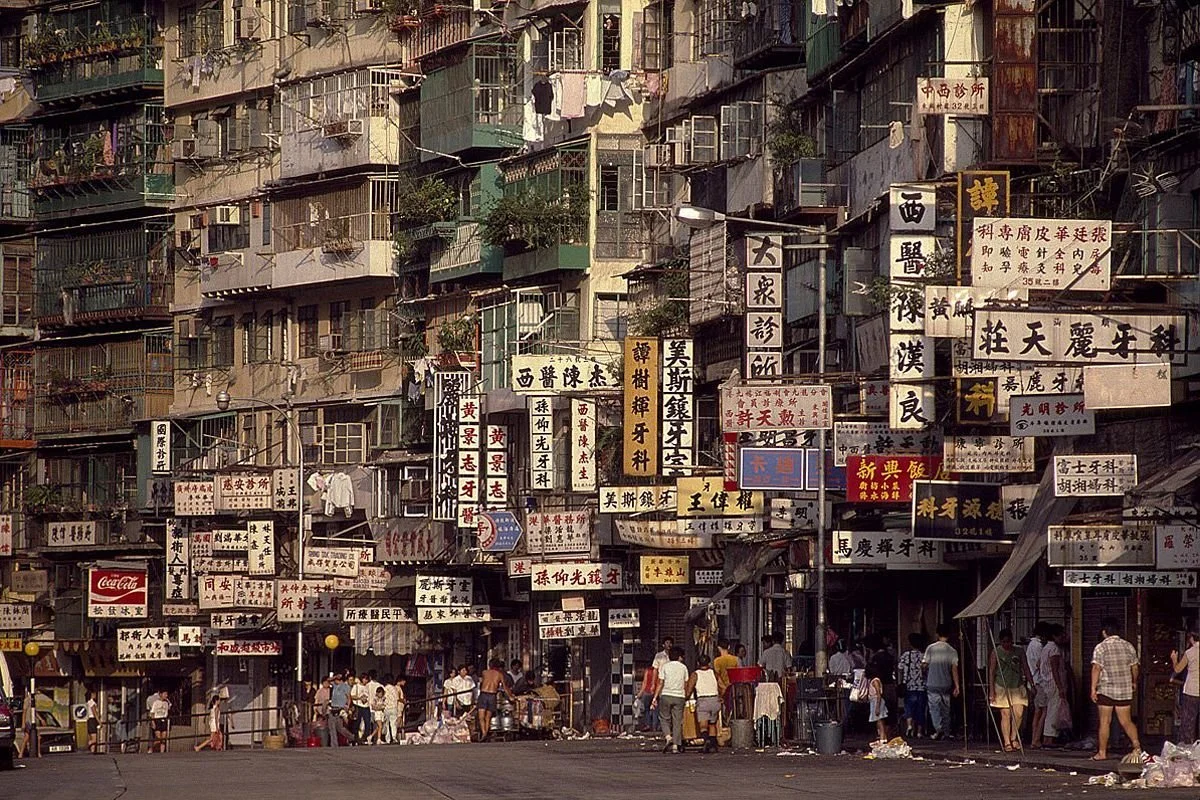
The City of Darkness
Kowloon Walled City
Director: Jocelyn Lam — Committee Type: Crisis Committee
“What fascinates about the Walled City is that, for all its horrible shortcomings, its builders and residents succeeded in creating what modern architects, with all their resources of money and expertise, have failed to: the city as 'organic megastructure', not set rigidly for a lifetime but continually responsive to the changing requirements of its users.”
— G. Girard, City of Darkness
By the late 1970s, the Kowloon Walled City has become one of the most densely populated and least regulated urban spaces in the world. Unchecked construction, extremely cramped living conditions, and criminal organizations (including triad networks) coexisted with local businesses and schools: everything operating without governmental oversight.
Neither fully British nor truly Chinese, the world turns a blind eye to this maze of a city where tens of thousands of people live. International eyes begin to focus on the City, as officials debate demolition and residents await decisions that will change their lives. Whichever course is taken, the Walled City now sits at the center of a delicate diplomatic balance—one that reflects the broader tensions between the West and the East.
-
British and Hong Kong officials are under growing international pressure to intervene, while China maintains sovereignty over the area, but is unable to exercise it. Delegates must decide whether to maintain the long-standing hands-off approach, implement changes, or pursue full-scale demolition. However, not everyone would be happy with the city being torn down: within the committee are delegates aligned with anti-demolition, or kaifong, groups within the City.
-
Whether demolished or not, the Kowloon Walled City is still an impasse to be overcome. If demolition is approved, delegates must coordinate relocation, compensation, and social support for nearly 35 000 residents while determining the future use of the cleared land. If demolition is rejected, the committee must instead address problems within the existing City: water supply failures, electrical shortages, lack of sanitation, and worsening living conditions. Regardless of the path, both Britain and China retain overlapping responsibilities over the area without clear authority. Delegates will need to create policies that balance geopolitical interests, local needs, and scrutiny on the international stage.